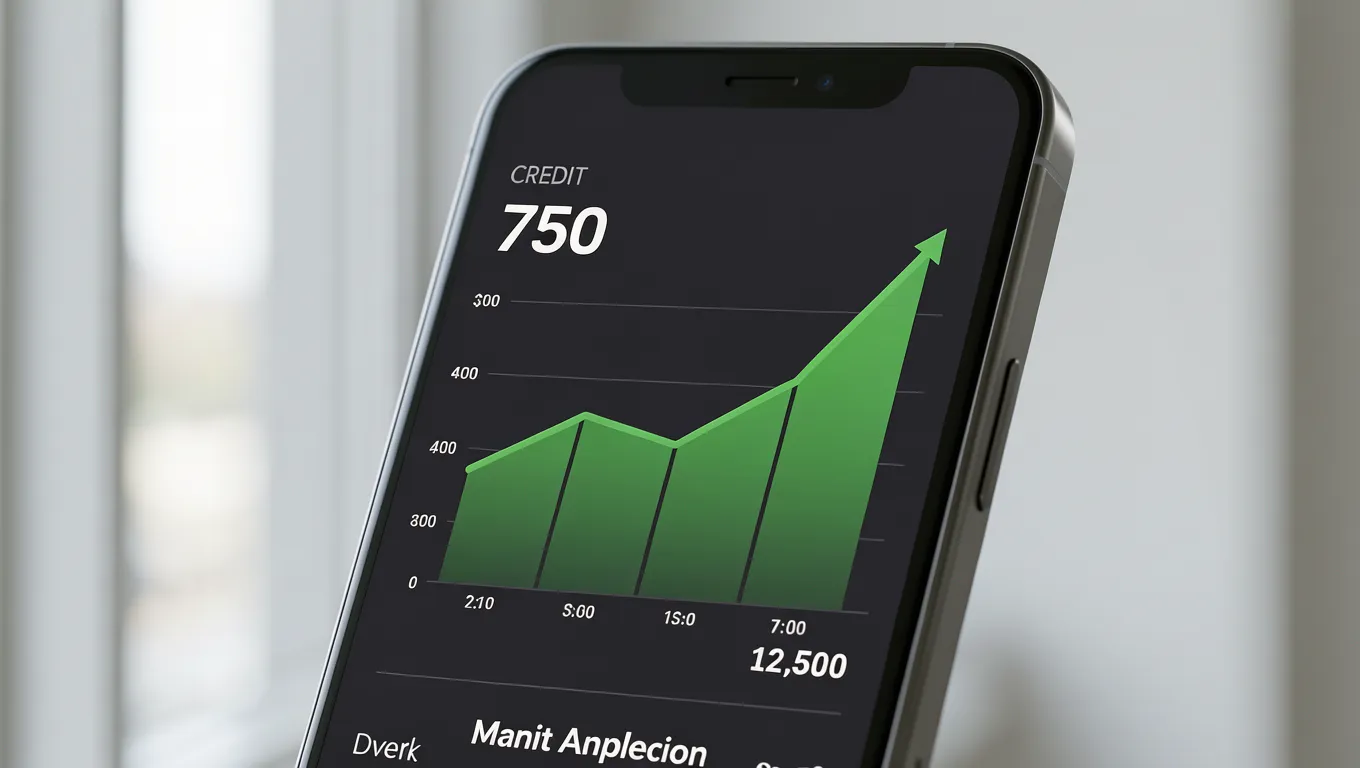
Having a strong rating can open doors to much lower interest rates in 2026. GoodKnight Credit helps you find lenders that reward your financial responsibility.
No hard credit pull · Takes 2 minutes
Won't impact your credit score
Provide basic information to see which lenders may match your specific profile and financial needs.
Review customized rates and terms from various potential lenders without impacting your score.
Choose the best option for your goal and move forward with the lender of your choice.
In the current financial landscape of 2026, having a good credit score< is more than just a number; it is a powerful tool for wealth building. Most lenders define a 'good' score as falling within the 670 to 739 range, though reaching the 'excellent' tier above 740 can unlock even greater advantages. These scores are calculated by major bureaus like Experian, Equifax, and TransUnion using complex algorithms that weigh your entire financial history. When you present a strong profile, you signal to lenders that you are a low-risk borrower, which is the primary driver behind lower interest rates.
Understanding these thresholds is vital because even a small increase in your rating can lead to significant savings over the life of a fixed-rate installment loan<. For instance, according to data often cited by the Consumer Financial Protection Bureau (CFPB), borrowers with higher scores typically see much lower APR ranges compared to those in the subprime category. While an average APR for a personal loan might range from 6% to 36%<, those with top-tier credit are often positioned at the lowest end of that spectrum, potentially saving thousands of dollars in interest costs alone.
It is important to remember that your score is not static. It fluctuates based on your debt-to-income ratio, how much of your available limit you use, and your history of timely payments. By maintaining a healthy profile, you position yourself to access larger loan amounts with more favorable repayment terms, providing the flexibility needed for major life milestones or unexpected expenses.
To truly master your financial standing, you must understand what goes into that three-digit number. Most scoring models used in 2026 prioritize payment history< above all else; a single late payment can have a disproportionate impact on your ability to secure favorable terms. Following closely behind is your credit utilization ratio, which measures how much of your total available credit you are currently using. Experts suggest keeping this below 30% to maintain an optimal standing.
Another critical component is the length of credit history<. The older your accounts, the more data points lenders have to verify your reliability. This is why financial advisors often recommend against closing out old, unused credit cards unless they carry high fees, as it helps preserve your average account age. Furthermore, the variety of your credit mix—having a blend of revolving accounts like credit cards and installment loans—can also play a role in how lenders perceive your risk profile.
Lenders also look beyond just the score to determine final eligibility. They will examine your debt-to-income (DTI) ratio to ensure you have sufficient cash flow to manage new obligations. Even with an exceptional score, a high DTI can act as a hurdle during the underwriting process. Therefore, managing both your score and your overall debt levels is the most effective way to ensure you qualify for the best possible loan products available in 2026.
| Credit Category | Typical Score Range | Estimated APR Outlook | Loan Terms Availability |
|---|---|---|---|
| Super Prime | 781-850 | Lowest available rates | Maximum flexibility/terms |
| Prime | 661-780 | Highly competitive | Very high availability |
| Near Prime | 601-660 | Moderate rates | Standard terms |
| Subprime | 300-600 | Higher interest costs | Limited/Restrictive |
When you apply for a loan in 2026 with an impressive credit profile, the conversation shifts from 'if' you can borrow to 'how' much it will cost. Borrowers with high scores often find themselves choosing between fixed-rate installment loans and more flexible options. A fixed rate provides the security of consistent payments throughout the life of the loan, which is a significant advantage in an unpredictable economy. Because your risk profile is low, lenders are more willing to offer these stable products with long durations.
It is also important to consider the origination fee. While some lenders might charge a percentage of the total loan amount upfront, those who present strong credit may find lenders that waive these fees entirely or offer significantly reduced rates. Always compare the Annual Percentage Rate (APR) rather than just the interest rate, as the APR includes these extra costs and provides a more transparent view of your true cost of borrowing.
Data from the Federal Reserve often shows that the gap between 'high-credit' and 'low-credit' borrowing costs is widening. This means that in 2026, being proactive about your credit health isn't just a good habit—it is a strategic financial move. By leveraging your score, you can turn debt into a tool for growth rather than a burden of high interest.
Depending on your credit and timeline, bad credit loans and avoiding bad credit and repair can be worth a look too.
Set up autopay for at least the minimum amount on all accounts to ensure you never miss a payment deadline.
Try to keep your revolving credit balances below 30% of your limit at all times.
Review your reports from the major bureaus annually to dispute any incorrect information immediately.
Avoid opening multiple new accounts in a short period, as this can trigger hard inquiries that temporarily lower your score.
We quickly connect you with lenders that value your specific credit profile.
Your data is protected with industry-leading encryption and privacy standards.
Exploring your options through our platform does not commit you to a loan.
See clear rates and terms so you can make an informed decision with confidence.
Adjust the sliders to see an instant estimate. Actual rates depend on your credit profile.
* Estimate only. Actual rate and terms depend on lender approval.
Estimated Monthly Payment
$332.14
per month for 36 months
No impact on your credit score