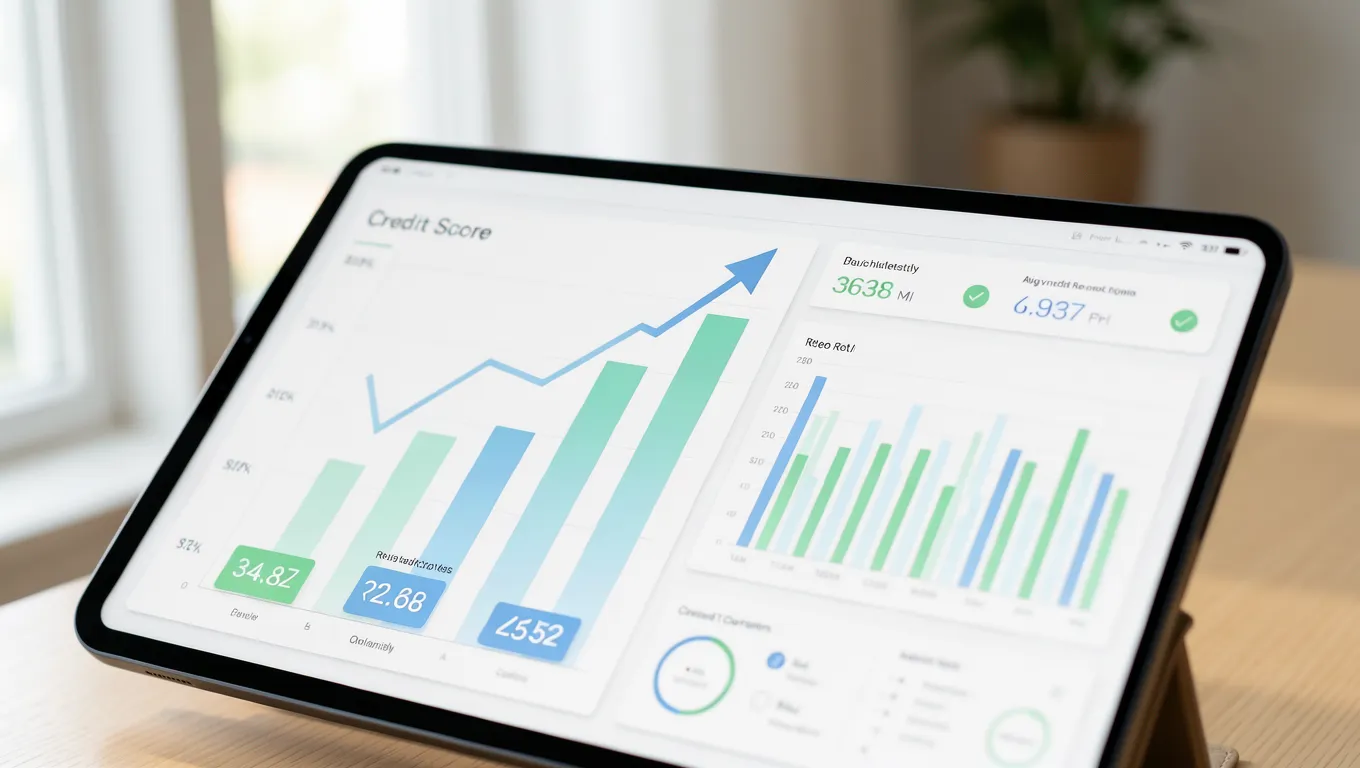
Understanding your financial standing is the first step toward securing the best possible loan terms. GoodKnight Credit helps you bridge the gap between your current score and your future goals.
No hard credit pull · Takes 2 minutes
Won't impact your credit score
Examine your history for any inaccuracies or errors that could be negatively impacting your standing.
Determine where you fall on the credit spectrum to understand what kind of terms you may qualify for.
Match with a network of lenders who accommodate your specific financial profile and needs.
Your credit report and score serve as a financial fingerprint, summarizing your history of managing debt. In 2026, understanding this data is essential because it directly influences the interest rates you may see when applying for credit. A typical credit report contains information from major bureaus like Experian, Equifax, or TransUnion, detailing everything from your payment history to your current outstanding balances. According to guidance from the Consumer Financial Protection Bureau (CFPB), it is vital to review these documents regularly to ensure no errors are artificially lowering your rating.
The actual score—often a FICO or VantageScore—is calculated using several weighted factors. The most significant is your payment history; even one late payment can cause a noticeable dip. Next is your credit utilization ratio, which measures how much of your available revolving credit you are currently using. Financial experts often suggest keeping this below 30% to maintain a healthy profile. Other factors include the length of your credit history and the variety of accounts you hold, such as fixed-rate installment loans or credit cards.
When you seek financing through GoodKnight Credit, lenders look at these metrics to assess risk. While we cannot guarantee approval, a strong profile may qualify you for an APR range 6%–36% depending on the lender and your specific data. Understanding that your score is a moving target allows you to make informed decisions about when to apply for significant loans, such as debt consolidation or home improvements.
When you begin the process of finding a loan, lenders do not look at your score in isolation. They also evaluate your debt-to-income (DTI) ratio, which is the percentage of your gross monthly income that goes toward paying debts. A lower DTI suggests you have more breathing room to handle new monthly payments, making you a potentially more attractive candidate for lenders. In 2026, as economic conditions shift, many lenders are placing even greater emphasis on this ratio alongside your overall creditworthiness.
The relationship between your score and the terms offered is direct. For instance, an individual with an exceptional score might access lower interest rates, which can save thousands of dollars over the life of a loan. Conversely, those with a fair or poor credit rating may find that lenders offer higher rates to offset the perceived risk. It is important to remember that terms are not fixed; they vary significantly based on the specific lender's appetite for risk and your unique financial profile.
Navigating these complexities can feel overwhelming, but knowing what to look for can provide a significant advantage. For example, if you notice high balances on multiple cards, you might consider how a unsecured personal loan could help consolidate that debt into a single monthly payment with a potentially lower rate. By focusing on improving your profile through consistent, on-time payments and reduced utilization, you position yourself for better opportunities in the 2026 lending market.
| Score Range | Classification | Typical APR Outlook | Lender Sentiment |
|---|---|---|---|
| 800 - 850 | Exceptional | Very Low | Highly Favorable |
| 740 - 799 | Very Good | Low | Favorable |
| 670 - 739 | Good | Moderate | Standard |
| 580 - 669 | Fair | Higher | Selective |
| Below 580 | Poor | High | Restrictive |
In the current 2026 economic landscape, interest rates are a primary concern for anyone seeking to borrow capital. The rate you are offered is not just a number; it represents the cost of borrowing money over time. Lenders use your credit profile to predict how likely you are to default on your obligations. A higher score signals reliability, which may result in more favorable fixed-rate installment loans. On the other hand, lower scores often lead to higher rates to compensate for the increased risk of non-payment.
It is also important to account for potential origination fees when comparing loan offers. Some lenders may offer a lower advertised APR but charge an upfront fee that increases your total cost of borrowing. To truly understand what you are paying, it is essential to look at the Annual Percentage Rate (APR), which includes both interest and these additional fees. This provides a more transparent view of the loan's actual cost.
Data from the Federal Reserve suggests that consumer behavior regarding credit shifts based on these rate fluctuations. When rates are high, borrowers often prioritize debt consolidation to manage existing obligations more efficiently. By understanding how your score influences these variables, you can time your application for a loan when your financial profile is at its strongest and the market conditions are most in your favor.
You may also want to review bad credit loans and credit score chart before deciding what works best.
Always ensure your bills are paid by the due date, as payment history is the most impactful factor in your score.
Try to pay down credit card balances to keep your usage below 30% of your total limit.
Limit the number of hard inquiries you trigger by not applying for multiple lines of credit in a short period.
Check your reports at least once a year to ensure there are no errors or inaccuracies affecting your rating.
We connect you with a wide array of lenders to increase your chances of finding a match.
Our streamlined system helps you find options tailored to your specific credit profile.
Your financial information is protected with industry-leading encryption and security protocols.
We provide clear insights so you can make the best decision for your 2026 financial goals.
Adjust the sliders to see an instant estimate. Actual rates depend on your credit profile.
* Estimate only. Actual rate and terms depend on lender approval.
Estimated Monthly Payment
$332.14
per month for 36 months
No impact on your credit score