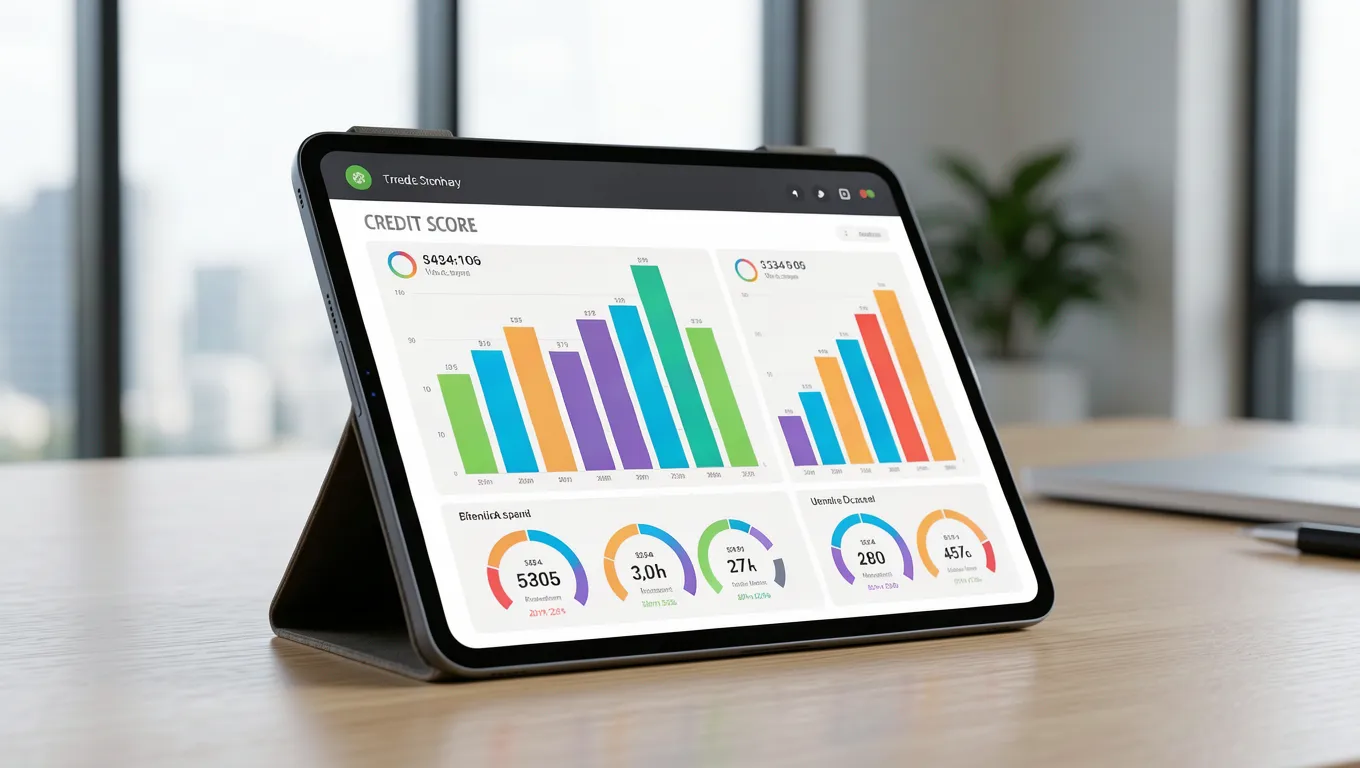
Understand exactly where you stand on the credit score chart to unlock better borrowing terms. We help you find lenders that align with your unique financial profile in 2026.
No hard credit pull · Takes 2 minutes
Won't impact your credit score
First, determine which tier you fall into on a standard <b>credit score chart</b> by checking your current FICO or VantageScore.
Use our platform to <a href='/faq/'>compare options</a> across various lenders without impacting your rating initially.
Once you find a match that fits your needs and score, submit an application to see if you <em>may qualify</em> for specific terms.
Understanding the nuances of a credit score chart is essential for anyone looking to secure financing in 2026. Most lenders rely heavily on FICO models, though some may utilize VantageScore metrics when evaluating risk. Generally, these scores range from 300 to 850, with higher numbers representing lower risk to the lender. For instance, a score above 740 is typically considered excellent, while anything below 580 might be categorized as poor or fair. Knowing your specific bracket allows you to set realistic expectations for interest rates and loan amounts.
When reviewing your report, it is important to recognize that different bureaus like Credit Score providers—specifically Experian, Equifax, and TransUnion—may show slightly different numbers. This variation occurs because each bureau uses slightly different algorithms to calculate your data. However, the core principles remain consistent: your history of on-time payments, your credit utilization ratio, and the age of your accounts all feed into this master chart. A high debt-to-income ratio can often act as a weight, pulling your score down even if you have no late payments.
According to guidance from the CFPB, understanding these numbers is the first step toward financial health. Lenders use these tiers to determine the interest rates they offer. For example, a borrower in the top tier might see an APR as low as 6%, whereas someone in a lower tier may face rates closer to 36% or higher. By mastering your position on the chart, you can better navigate the landscape of personal loans and debt consolidation.
| Score Range | Rating Category | Likely Interest Rate Outlook | Loan Accessibility |
|---|---|---|---|
| 800 - 850 | Exceptional | Lowest available APRs | Very High |
| 740 - 799 | Very Good | Highly competitive rates | High |
| 670 - 739 | Good | Standard market rates | Moderate to High |
| 580 - 669 | Fair | Higher interest rates | Moderate |
| 300 - 579 | Poor | Highest APR range | Limited/Specialty Lenders |
The direct correlation between your position on a credit score chart and your monthly payment is significant. When you apply for a fixed-rate installment loan, the interest rate set by the lender is heavily influenced by your perceived risk. A borrower with an 'Excellent' rating can often secure lower principal repayments over the life of the loan, which results in substantial savings. Conversely, those in the 'Fair' or 'Poor' categories may find that a higher origination fee or a much higher APR makes borrowing more expensive.
It is vital to remember that while your score determines the starting point for many offers, it is not the only factor. Lenders in 2026 will also look at your income stability and total debt obligations. As noted by various consumer protection agencies like the FTC, transparency in these terms is key. You should always compare the total cost of borrowing—including all interest and fees—rather than just looking at the monthly payment amount. A lower monthly payment might seem attractive, but if it comes with a much longer term or higher APR, you may end up paying significantly more over time.
For those looking to move up the chart, understanding these mechanics is vital. Many people use personal loans for Bad Credit scenarios specifically to consolidate high-interest debt into a single, more manageable payment. If your score allows it, moving from a variable rate to a fixed-rate loan can provide much-needed stability in an evolving economy. Always ensure you see your rate before committing to a long-term financial obligation.
As we move through 2026, the landscape of personal lending continues to evolve. Borrowers must be more discerning than ever when interpreting their place on a credit score chart. It is no longer enough to simply know your number; you must understand how that number interacts with current market interest rates and lender appetites. For instance, even with a high score, a sudden shift in the Federal Reserve's monetary policy could influence the base rates offered by private lenders.
For those navigating the 'Fair' or 'Poor' sections of the chart, the goal is often stability rather than just speed. You might find that certain lenders offer bridge financing to help you reach the next tier, but these come with specific conditions. It is important to avoid predatory products that promise instant approval without looking at your full financial picture. Instead, focus on reputable lenders who provide clear disclosures regarding their APR and terms.
If you are currently managing multiple high-interest credit card balances, using a loan to consolidate those debts can be a strategic move. By moving from revolving debt to a structured fixed-rate installment loan, you can potentially improve your credit utilization and, eventually, your score. This proactive approach to managing your rating is one of the most effective ways to build long-term wealth and financial flexibility.
Regularly check your reports from all three bureaus to ensure no incorrect information is dragging down your score.
Aim to keep your total credit card balances below 30% of your available limit to boost your rating quickly.
Set up autopay for at least the minimum amount on all accounts to ensure you never have a late payment} on record.
Avoid applying for multiple types of credit in a short window, as this can cause a temporary dip in your score.
We connect you with a vast array of lenders to find the best match for your score.
Your sensitive financial information is handled with industry-leading encryption.
Get a sense of your potential loan options in just a few simple steps.
See real rates and terms without the guesswork or hidden surprises.
Adjust the sliders to see an instant estimate. Actual rates depend on your credit profile.
* Estimate only. Actual rate and terms depend on lender approval.
Estimated Monthly Payment
$332.14
per month for 36 months
No impact on your credit score